This image of Elsa, like all the photos on Enchanted Revelries, will enlarge to a much larger photo when clicked.
There can be no doubt that Elsa Schiaparelli was one of the greatest
fashion designers in history, and yet, it is highly likely that you, or
even some of your most fashion savvy friends, aren’t perfectly familiar
with her name. And even if you’ve heard of Elsa Schiaparelli before, you
may have trouble conjuring up an image of her designs. In August 1934
she was the first female fashion designer to grace the cover of Time
Magazine, yet somehow the life and work of this extraordinary woman has
faded from public consciousness. While the world may not remember her,
evidence of Elsa Schiaparelli’s influence abounds in the very foundation
of fashion. A rival of Coco Chanel, she set herself apart from the pack
by collaborating with avant-garde artists such as Surrealist Salvador
Dalí and poet Jean Cocteau. Although Chanel may have won the prize for
fashion notoriety we think Elsa Schiaparelli takes the cake for daring
innovation.

Elsa’s innovative (and infamous) Shoe Hat, 1938, Wool felt and silk velvet, Victoria and Albert Museum.
In
the roaring 20’s and glittering 30’s, Elsa Schiaparelli was considered
the reigning monarch of women’s fashion. “She slapped Paris. She smacked
it. She tortured it. She bewitched it. And it fell madly in love with
her” proclaimed Yves Saint Laurent. Next came New York, London, Moscow
and Hollywood, all who encountered Schiaparelli’s designs paid homage to
the eccentric glamour embodied within it. In her creations one can
chart the shifting roles of women and the social revolution that
inspired them. Practical and whimsical at the same time, Elsa
Schiaparelli called upon the muses of irony, eccentricity and function
without detracting from the sensuality of a woman’s form.
If considered in the context of today’s
world, the work of this prolific fashion designer continues to be a
shining beacon of experimental design. Elsa Schiaparelli mastered the
genre of wearable art. Many would still consider some of Elsa
Schiaparelli’s fashion design “shocking” (indeed, shocking was a word
Schiaparelli made her own). Much of what we do see in today’s climate
owes it’s daring to the likes of Elsa Schiaparelli. Never before had the
couture houses of Paris seen collections of futuristic designs crafted
with innovation and inspired by the unconventional. Astrology, tattoos,
paganism, the circus and of course Surrealist art were just a few of her
collections varied themes.
The punch-packing name of Chanel
continues to dominate the fashion scene, only taking on more steam in
recent decades. However, this wasn’t always the case. Chanel was
Elsa’s contemporary and competitor, and at times Coco existed in the
background of Schiaparelli’s success. These two irreplaceable women were
working in the same vein and both in ways that revolutionized fashion.
They moved in the same social circles competing for the same audience
and clientele with opposing concepts. It was the flamboyant against the
simplistic. These fierce competitors were often heard making snide
remarks about each other and Chanel not so fondly referred to
Schiaparelli as “The Italian artist who makes clothes.” Although Mme
Chanel was attempting to put Elsa Schiaparelli down, this connection to
art fueled her success. It was said by Janet Flanner, The New Yorker’s
Paris correspondent at the time, “A dress from Schiaparelli ranks like a
modern canvas.”

Coco Chanel on the left, and Elsa Schiaparelli on the right.
The innovative advantage held by
Schiaparelli was closely related to her modernist sensibilities and
intimate familiarity with both the Dada and Surrealist art movements.
Collaborations with artists are responsible for a majority of Elsa
Schiaparelli’s most infamous work. Schiaparelli and many artists of her
time held the belief that fashion and art share the same goals – to
enrich and deepen an understanding of the world that surrounds us.
Unlike the marketing strategy we see in
many fashion “colabs” of today, (think Stella McCartney for Adidas, or
Alexander Wang for H&M) Schiaparelli’s collaborative oeuvre ensued
from genuine involvement in the art world and a creative vision shared
by two artists and friends. And the inspiration was a two way street,
with Schiaparelli’s work making an appearance in her creative
collaborator’s work, as seen in a remarkable 1929 photograph by Salvador
Dali, staged and altered with black ink, in which the model wears a
astrology themed necklace designed by Schiaparelli (see below).

Salvador Dali, 1929
A mysterious and contemplative
individual more comfortable out of the limelight, Schiaparelli preferred
her work to speak loudly in her place. Yet, this private and reserved
manner does not mean she was a shrinking violet. Conversely, as the
daughter of both academic and noble aristocracy, Elsa Schiaparelli was
born into the center of Roman high society and lived a life envied by
many for its privilege and freedom. Coming of age at the beginning of
the 20th century, Elsa Schiaparelli was pinned between tradition and
modernity and strived to assert her individuality.
Dissatisfied by bourgeoisie life she
took daring risks without fear of losing her privilege. At twenty-one
and still considered a minor, Elsa published a collection of erotic
poetry landing her in a Swiss convent. Already a headstrong and
calculating character, she staged a prolonged hunger strike which forced
the nuns to release her. After this hard earned liberation Schiaparelli
quickly fled to London and accepted employment as a nanny, a position
considered beneath her by her parents. This would be the beginning of a
life outside the stifling bosom of wealth and titles for Elsa
Schiaparelli.
The proximity of London to the fabled avant-garde of Paris was too much
to bear and Schiaparelli soon found herself wiggling into the exciting
and exclusive post WWI art scene. Unable to afford a dress for a ball
she was set on attending, Schiap (as she preferred to be called) is said
to have wrapped her lithe figure in a curtain, haphazardly fastened
with hairpins. This was certainly the first talked about Schiaparelli
design as it promptly came unwrapped when she took to the dance floor!

On the left, The Greek God Apollo in his golden chariot, embroidery on
velvet, 1938 at the Philadelphia Museum of Art. On the right, Skeletion
Dress, Silk crêpe, trapunto quilting, cotton wadding, 1938, at the
Victoria and Albert Museum
While immersing herself in the culture of Paris by attending gallery
openings, fashion shows and lectures, Schiap became enamored with the
traveling theosophist and psychic medium Count William de Wendt de
Kerlor. The bonds of their love were forged with intellectual
discussions of the esoteric and soon after meeting they married. The
newlyweds moved to New York City as a response to The Count’s
deportation and criminal “fortune telling” charges.

While living in New York, Elsa
Schiaparelli worked at the French fashion boutique of Gaby Picabia, ex
wife of famed French Dada artist Francis Picabia, it was here that she
met and became close to artists Marcel Duchamp and Man Ray.
The art and social scene in New York
ignited Schiaparelli and she thrived off the intense energy of the city.
However, her new husband did not take to America or married life and
disappeared soon after their child was born.

Elsa Schiaparelli at home.
As if perfectly timed, the end of Elsa Schiaparelli’s marriage coincided with Gaby Picabia’s return to Paris – several Dada and surrealist artists in tow. With nothing holding her back Schiaparelli gathered her daughter and their life in NYC and returned to Paris. It was the necessity to support herself independently that inspired Schiaparelli to vehemently pursue a career in fashion upon arrival in Paris and within no time Schiaparelli achieved her first success with a series of trompe l’oeil sweaters appearing in Vogue and flying off the shelves. It wasn’t long before the “Schiap Shop” at 21 Place Vendome was in full swing.

Model Dovima wears one of Elsa's creations.
Considered ugly by her family, and so,
at an early age Schiaparelli set her imaginative and unconventional
creativity to change her physical appearance. At 7 years old she was
caught in a dangerous attempt at beatification that involved shoving
seeds deep into her nostrils and ears in the hopes that flowers would
grow and decorate a face she understood was lacking. This sad and naïve
logic is not without validity and we see it put to use in some of her
basic (if not downright dowdy) designs embellished with elaborate and
often bizarre ornamentations. This deep personal understanding of the
insecurities many women battle informed her designs and solidified her
as a fashion designer “for the women.”
The elegant women of Europe and the
coasts of American took notice of Schiaparelli’s presence in both the
pages of Vogue as well as on the silver screen as she dressed the stars
on and off set. Designing the costumes for several films’ leading
ladies, she famously dressed Zsa Zsa Gabor in Moulin Rouge, which won an
Academy Award for Costume Design. Sadly Schiaparelli was not credited
for the film’s costumes on a whole. Elsa Schiaparelli also had a close
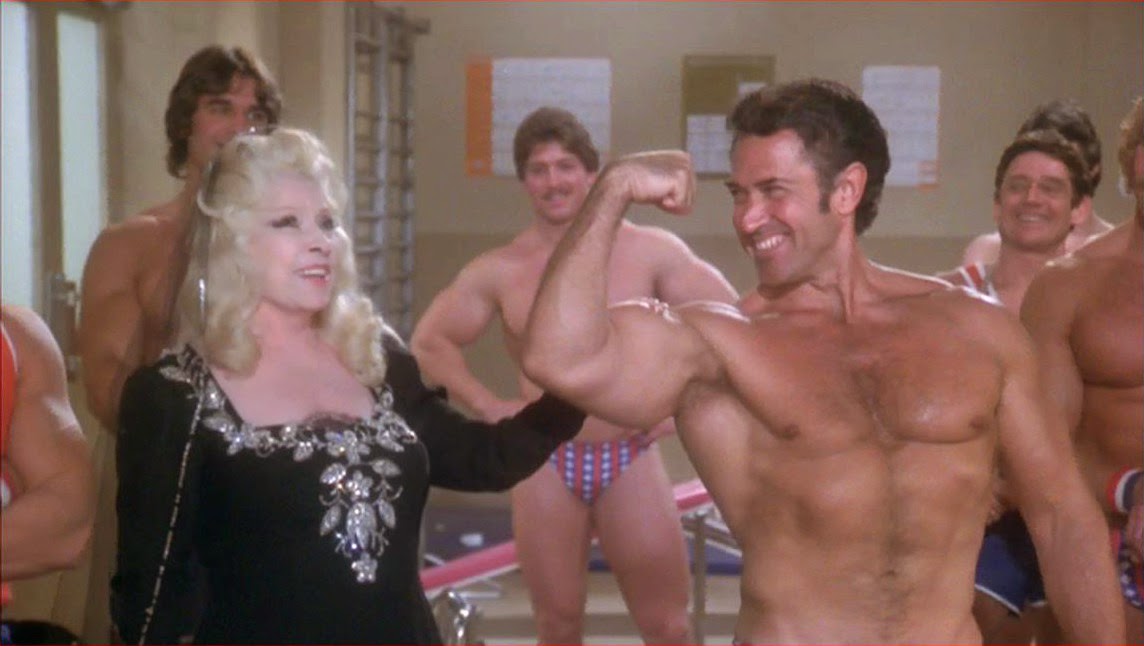
relationship with Mae West through costume design and the bottles
created to house the fragrant liquid of Shocking, Schiaparelli’s first
perfume, were inspired by a mannequin built to Mae West’s measurements.
 Bug Necklace, 1938
A true modernist and innovator at heart,
Schiaparelli was the first to experiment with synthetic materials in
couture, effectively turning her fashion creations into art. One of the
most controversial and bizarre was called Rhodophane, a clear plastic
related to cellophane. Schiaparelli used this material to create a
floating insect necklace as well as a cape that apparently shattered
like glass if handled improperly.
As the pioneer of “prêt-à-porter” better
known as “ready to wear”, Schiaparelli was the very first couture house
to offer clothing off the rack, quickly dismantling the established and
unaffordable practice of made to order fashion. A well known phenomenon
today (for better or worse), the accessibility of Schiaparelli’s work
quickly created a wave of imitators, and before long designs identical
to hers were available in mid-level dress shops and department stores
world wide.
In the midst of the Nazi occupation of
Paris, Elsa Schiaparelli was repeatedly advised to leave the city, yet
insisted on remaining for as long as possible. During the height of WWII
Schiaparelli designed practical wartime clothes for women with air
raids and foot travel in mind, coats with built in bags, zippered
one-piece jumpsuits with cavernous pockets and reversible dresses with
convertible aspects in order to be worn several ways. She created style
for women who were joining the war effort or the workplace. Women of the
world owe Schiaparelli big thanks for the popularization of “culottes” –
loose pants ending just below the knee. They were controversial at the
time due to the increase in ability and mobility that they afforded
daring women. Controversially Schiaparelli also created a small capsule
collection for Soviet women consisting of a cropped black dress paired
with a red coat and beret. While in the USSR its rumored she told Stalin
what she thought of Communism’s repression of women, much to his
irritation. Needless to say her designs were deemed “impractical” and
rejected just before production.

Model Simone Micheline Bodin wearing Schiaparelli, photo by Clarke Henry
Both the accessibility of Elsa’s designs
and the ravages of World War Two weakened the house of Schiaparelli
financially and with surrealism falling out of favor Schiaparelli began
to flounder. Rumors were flying of her involvement in the German war
effort and her employees began striking. At her last runway show just
before 1954 ensembles were seen floating down the runway unfinished with
loose threads and sharp pins – a final display of Schiaparelli’s
trademark courage in the face of opposition or a sign of wavering mental
health?
In 1954 Elsa Schiaparelli declared bankruptcy and retired from the fashion world to pen her autobiography “Shocking Life”.
The business failure meant that Schiaparelli’s name is not as well
remembered as that of her great rival. Chanel has been kept alive by
Karl Lagerfeld and continues to hold a center stage in the theater of
fashion. After lying dormant for over sixty years it looks like
something similar is happening for Schiaparelli. Diego Della Valle the
CEO of leather goods company Todd’s purchased the name Elsa Schiaparelli
in 2007 and has since appointed designer Marco Zanini and ambassador
Farida Khelfa taking up residence in 21 Place Vendome, the original
location of the “Schiap Shop.”
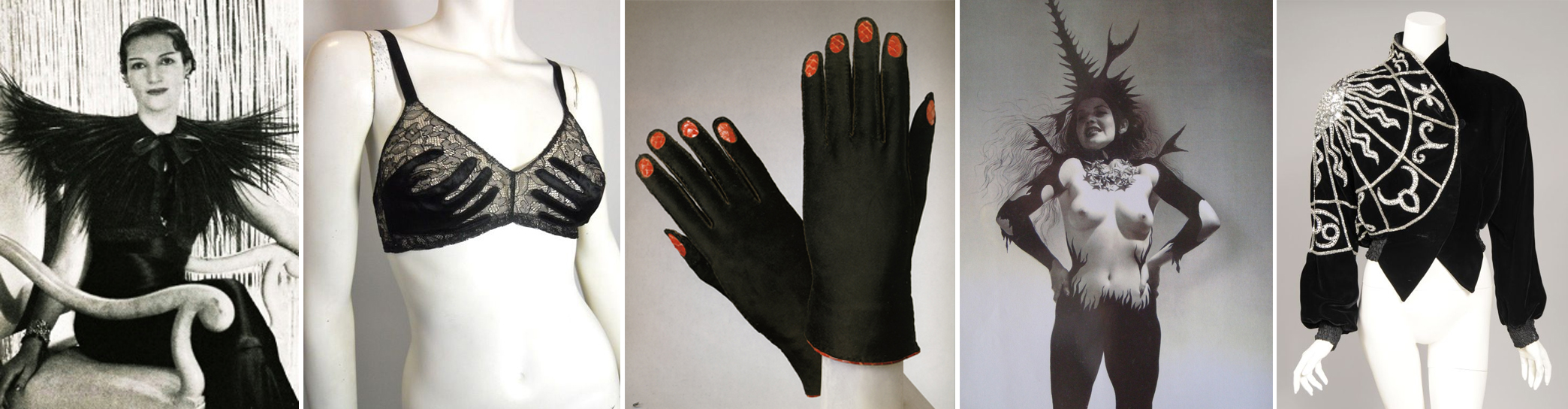
Some favorite Schiaparelli moments...


I hope you've enjoyed helping me celebrate the birthday of one of fashion's brightest stars and shining artists!
Special thanks to Olivia la Roche and Lone Wolf.
Now go make something beautiful!
¸.•´¸.•*´¨) ¸.•*´¨)(¸.•´
(¸.•´♥ Tristan ♥